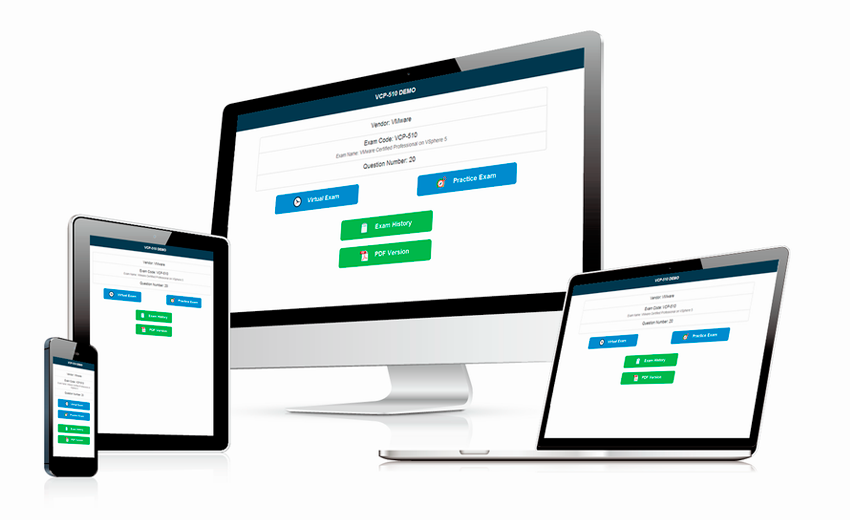
Try Before You Buy

Download a free sample of any of our exam questions and answers

  • 24/7 customer support, Secure shopping site
  • Free One year updates to match real exam scenarios
  • If you failed your exam after buying our products we will refund the full amount back to you.

Microsoft AZ-104 Korean Exam Braindumps - in .pdf Free Demo

  • Exam Code: AZ-104-KR
  • Exam Name: Microsoft Azure Administrator (AZ-104 Korean Version)
  • , Last Updated: Nov 13, 2026
  • Q & A: 481 Questions and Answers
  • Convenient, easy to study. Printable Microsoft AZ-104 Korean PDF Format. It is an electronic file format regardless of the operating system platform. 100% Money Back Guarantee.
  • PDF Price: $69.99    

Microsoft AZ-104 Korean Exam Braindumps - Testing Engine PC Screenshot

  • Exam Code: AZ-104-KR
  • Exam Name: Microsoft Azure Administrator (AZ-104 Korean Version)
  • , Last Updated: Nov 13, 2026
  • Q & A: 481 Questions and Answers
  • Uses the World Class AZ-104 Korean Testing Engine. Free updates for one year. Real AZ-104 Korean exam questions with answers. Install on multiple computers for self-paced, at-your-convenience training.
  • Testing Engine Price: $69.99    

Microsoft AZ-104 Korean Value Pack (Frequently Bought Together)

If you purchase Microsoft AZ-104 Korean Value Pack, you will also own the free online test engine.

PDF Version + PC Test Engine + Online Test Engine

Value Pack Total: $139.98  $89.99


About Microsoft Azure Administrator (AZ-104 Korean Version) exam torrent

As the old saying goes, learning never stops — and lifelong learning has become genuinely popular around the world. If the Microsoft Azure Administrator (AZ-104 Korean Version) credential is your next lesson, ExamsTorrent prepares you for the AZ-104 Korean exam with 481 practice questions built around the official objectives.

Microsoft AZ-104 Korean Exam Overview:

Certification Vendor:Microsoft
Exam Name:Microsoft Azure Administrator
Exam Number:AZ-104
Exam Price:USD 165
Passing Score:700 / 1000
Related Certifications:Microsoft Certified: Azure DevOps Engineer Expert
Microsoft Certified: Azure Solutions Architect Expert
Exam Format:Multiple choice, Performance-based labs, Multiple response, Case studies, Drag-and-drop
Available Languages:Portuguese (Brazil), French, English, Korean, Chinese (Simplified), Chinese (Traditional), German, Italian, Spanish, Japanese
Real Exam Qty:40–60
Exam Duration:120 minutes
Certificate Validity Period:1 year (renewable free via online assessment)
Recommended Training:Microsoft Learn Free Learning Path
Instructor-Led Course AZ-104T00
Exam Registration:Microsoft Learn Registration
Pearson VUE
Sample Questions:Free Download AZ-104 Korean Exam braindumps
Exam Way:Online proctored or Onsite at authorized test centers
Pre Condition:No mandatory prerequisites; recommended: 6+ months hands-on experience administering Azure, familiarity with Azure Portal, PowerShell, Azure CLI, ARM templates or Bicep, networking, servers, and virtualization concepts
Official Syllabus URL:https://learn.microsoft.com/en-us/credentials/certifications/resources/study-guides/az-104

Microsoft AZ-104 Korean Exam Syllabus Topics:

SectionWeightObjectives
Monitor and maintain Azure resources10–15%- Implement backup and recovery
  • 1. Configure Azure Backup and Recovery Services vaults
    • 2. Implement Azure Site Recovery
      - Maintain resource health and updates
      • 1. Apply updates and patches
        • 2. Analyze resource health and recommendations
          - Monitor resources and performance
          • 1. Configure Azure Monitor and metrics
            • 2. Create alerts and action groups
              • 3. Use Log Analytics and Kusto Query Language
                Deploy and manage Azure compute resources20–25%- Automate deployment and configuration
                • 1. Use Azure Automation and scripts
                  • 2. Deploy resources with ARM templates or Bicep
                    - Manage containerized workloads
                    • 1. Deploy and manage Azure Kubernetes Service
                      • 2. Deploy and manage Azure Container Instances
                        - Manage virtual machine scale sets
                        • 1. Configure scaling and management
                          - Deploy and configure virtual machines
                          • 1. Create and configure VMs
                            • 2. Configure high availability and scaling
                              • 3. Manage VM extensions and images
                                Implement and manage virtual networking15–20%- Monitor and troubleshoot networking
                                • 1. Use Network Watcher and diagnostic tools
                                  - Configure virtual networks
                                  • 1. Plan and configure IP addressing
                                    • 2. Create and configure VNet and subnets
                                      • 3. Configure VNet peering and service endpoints
                                        - Secure network access
                                        • 1. Configure application security groups
                                          • 2. Configure network security groups (NSGs)
                                            • 3. Implement Azure Firewall and WAF
                                              - Configure connectivity services
                                              • 1. Configure Azure DNS and Private DNS
                                                • 2. Implement VPN Gateway and ExpressRoute
                                                  • 3. Implement Private Link and Endpoints
                                                    Manage Azure identities and governance20–25%- Manage access to Azure resources
                                                    • 1. Implement and manage role-based access control (RBAC)
                                                      • 2. Assign roles at different scopes
                                                        • 3. Interpret access assignments and permissions
                                                          - Manage Microsoft Entra users and groups
                                                          • 1. Configure self-service password reset
                                                            • 2. Manage licenses and external identities
                                                              • 3. Create and configure users and groups
                                                                - Manage Azure subscriptions and governance
                                                                • 1. Apply resource locks and tags
                                                                  • 2. Implement and manage Azure Policy
                                                                    • 3. Configure management groups and subscriptions
                                                                      • 4. Manage costs and billing
                                                                        Implement and manage storage15–20%- Configure storage accounts
                                                                        • 1. Create and configure storage accounts
                                                                          • 2. Choose replication and redundancy options
                                                                            • 3. Manage encryption and security settings
                                                                              - Manage data in storage
                                                                              • 1. Configure and use Azure Files
                                                                                • 2. Configure and use Azure Blob Storage
                                                                                  • 3. Manage data lifecycle and protection
                                                                                    • 4. Use tools like AzCopy and Storage Explorer
                                                                                      - Configure access to storage
                                                                                      • 1. Implement identity-based access
                                                                                        • 2. Configure firewalls and virtual network access
                                                                                          • 3. Manage access keys and shared access signatures (SAS)

                                                                                            AZ-104 Korean Exam Details and Study Questions

                                                                                            The AZ-104 Korean exam contains 40–60 questions with 120 minutes minutes to complete them. A clear knowledge structure is what makes that volume manageable — you answer faster when every topic has its place.

                                                                                            Passing the AZ-104 Korean exam requires 700 / 1000, and registration costs USD 165. Structured preparation is how you spend study time once and exam fees once.

                                                                                            Immediately. The system emails you at once with the download link for the Microsoft Azure Administrator (AZ-104 Korean Version) materials — the whole delivery process takes about a minute. Open the email, download the AZ-104 Korean exam product to your computer, install it, and you are studying within minutes of deciding to. If the message does not appear, check your spam folder; after 2 hours without delivery, contact support. Install on all of your own devices without limit.

                                                                                            No mandatory prerequisites; recommended: 6+ months hands-on experience administering Azure, familiarity with Azure Portal, PowerShell, Azure CLI, ARM templates or Bicep, networking, servers, and virtualization concepts

                                                                                            The AZ-104 Korean exam is the official assessment behind the Microsoft Azure Administrator (AZ-104 Korean Version) certification from Microsoft. Lifelong learning has become the norm precisely because industries keep moving — and this credential is a concrete way to keep pace. Many candidates only sit it seriously on a second attempt; structured preparation is how you make the first one count.

                                                                                            Microsoft recommends these training resources for candidates:

                                                                                            Official training adds depth; a clearly structured practice bank with verified answers adds direction. Together they cover both sides of preparation.

                                                                                            The official outline divides the AZ-104 Korean exam into weighted domains, including:

                                                                                            • Implement and manage virtual networking (15–20%)
                                                                                            • Deploy and manage Azure compute resources (20–25%)
                                                                                            • Monitor and maintain Azure resources (10–15%)

                                                                                            The Microsoft Azure Administrator (AZ-104 Korean Version) bank at ExamsTorrent mirrors this structure, so the knowledge map you build while practicing matches the one the exam uses.

                                                                                            Registration for the AZ-104 Korean exam runs through these official channels:

                                                                                            It is never too late to start — but starting today beats starting after one more week of hesitation.

                                                                                            Structure is the design principle. The Microsoft Azure Administrator (AZ-104 Korean Version) materials first build a clear knowledge structure of the AZ-104 Korean exam, so difficult points become understandable in sequence rather than intimidating in isolation. Our experts have prioritized the most important knowledge for busy learners, and every answer is expert-verified — so your limited hours go exactly where the objectives point.

                                                                                            Microsoft Azure Administrator (AZ-104 Korean Version) Sample Questions:

                                                                                            Question #1

                                                                                            다음과 같은 사용자 지정 역할 기반 액세스 제어(RBAC) 역할을 보유하고 있습니다.
                                                                                            다음 각 문장에 대해, 문장이 사실이면 '예'를 선택하고, 그렇지 않으면 '아니요'를 선택하십시오.
                                                                                            참고: 정답 하나당 1점입니다.

                                                                                            전시하다

                                                                                            전시하다

                                                                                            Reveal Solution  Discussion  0

                                                                                            Correct Answer:


                                                                                            Explanation:
                                                                                            Detailed Explanation
                                                                                            Role1 ' s actions list grants no Microsoft.Authorization/roleAssignments/write permission at all, and its notActions block explicitly and redundantly excludes any Microsoft.Authorization write action - so users with Role1 cannot assign Role1 (or any role) to anyone; that requires User Access Administrator or Owner, neither of which Role1 grants - No. Role1 ' s actions include Microsoft.Compute/virtualMachines/* (full VM lifecycle including creation), Microsoft.Compute/disks/*, Microsoft.Network/networkInterfaces/*, Microsoft.Network/virtualNetworks/subnets/join/action, and Microsoft.Resources/deployments/* - together these cover every action required to deploy a brand-new virtual machine (create its disk, create/join its NIC to a subnet, and create the VM resource itself) - Yes. Setting a static private IP address on a VM ' s NIC is an update to that NIC ' s ipConfigurations property, covered by the granted Microsoft.Network/networkInterfaces
                                                                                            /* wildcard (which includes write) - Yes.
                                                                                            Official Reference
                                                                                            Azure custom roles - https://learn.microsoft.com/en-us/azure/role-based-access-control/custom-roles

                                                                                            Question #2

                                                                                            adatum.com이라는 Azure Active Directory(Azure AD) 테넌트가 있습니다. adatum.com에는 다음 표에 있는 그룹이 포함되어 있습니다.
                                                                                            다음 표에 표시된 대로 구성된 두 개의 사용자 계정을 생성합니다.
                                                                                            User1과 User2는 어떤 그룹에 속합니까? 정답을 선택하려면 답변란에서 적절한 옵션을 고르세요.
                                                                                            참고: 정답 하나당 1점입니다.

                                                                                            전시하다

                                                                                            전시하다

                                                                                            전시하다

                                                                                            Reveal Solution  Discussion  0

                                                                                            Correct Answer:


                                                                                            Explanation:
                                                                                            Detailed Explanation
                                                                                            Group1 ' s dynamic rule matches any user whose city starts with ' m ' (case-insensitive). User1 (Montreal) and User2 (Melbourne) both satisfy this and are members of Group1. Group2 ' s dynamic rule matches any user whose department is NOT ' HR ' . User1 ' s department is Human resources (HR), so the -notIn[ " HR " ] condition evaluates false and User1 is excluded from Group2 -- User1 belongs to Group1 only. User2 ' s department is Marketing (not HR), so the condition evaluates true and User2 is a member of both Group1 (city match) and Group2 (department match) -- Group1 and Group2 only. Group3 uses Assigned (not dynamic) membership and no manual assignment is given for either user, so neither user is a member of Group3. Both selections match the source key.
                                                                                            Official Reference
                                                                                            Dynamic membership rules for groups in Microsoft Entra ID - https://learn.microsoft.com/en-us/entra
                                                                                            /identity/users/groups-dynamic-membership

                                                                                            Question #3

                                                                                            App1을 Azure로 이전할 계획입니다.
                                                                                            네트워크 보안 그룹(NSG)을 생성합니다.
                                                                                            사용자가 App1에 접근할 수 있도록 하는 해결책을 제시해야 합니다.
                                                                                            무엇을 추천하시겠습니까?

                                                                                            • A. 인터넷에서 포트 443으로 나가는 보안 규칙을 생성합니다. 모든 서브넷에 NSG를 연결합니다.
                                                                                            • B. 인터넷에서 들어오는 포트 443에 대한 보안 규칙을 생성합니다. NSG를 모든 서브넷에 연결합니다.
                                                                                            • C. 인터넷에서 들어오는 포트 443에 대한 보안 규칙을 생성합니다. 웹 서버가 포함된 서브넷에 NSG를 연결합니다.
                                                                                            • D. 인터넷에서 포트 443으로 나가는 보안 규칙을 생성합니다. 웹 서버가 포함된 서브넷에 NSG를 연결합니다.
                                                                                            Reveal Solution  Discussion  0

                                                                                            Correct Answer: C  🗳️

                                                                                            Explanation: Only visible for ExamsTorrent members. You can sign-up / login (it's free).

                                                                                            Question #4

                                                                                            Azure 구독에 storage1이라는 스토리지 계정이 있습니다. storage1 계정에는 container1이라는 컨테이너가 있습니다.
                                                                                            rule1이라는 이름의 Blob 수명 주기 규칙을 생성합니다.
                                                                                            45일 동안 업데이트되지 않은 Blob을 컨테이너에서 자동으로 이동하도록 rule1을 구성해야 합니다!
                                                                                            Cool 액세스 등급으로 이동합니다.
                                                                                            규칙을 어떻게 완성해야 할까요? 답하려면 답변란에서 적절한 옵션을 선택하세요.
                                                                                            참고: 정답 하나당 1점입니다.

                                                                                            전시하다

                                                                                            Reveal Solution  Discussion  0

                                                                                            Correct Answer:


                                                                                            Explanation:
                                                                                            Detailed Explanation
                                                                                            A blob lifecycle management rule ' s tierToCool action can be triggered by one of three time-based conditions: daysAfterCreationGreaterThan (time since the blob was first created, regardless of later edits), daysAfterLastAccessTimeGreaterThan (time since the blob was last read - only usable if last-access-time tracking is separately enabled on the account), or daysAfterModificationGreaterThan (time since the blob ' s content was last written/updated). " Blobs that were NOT updated for 45 days " specifically describes modification recency, not creation age or read access, so the correct condition is daysAfterModificationGreaterThan, set to 45. For the blob type filter, Azure Blob lifecycle management tiering actions (tierToCool, tierToArchive) apply only to block blobs - page blobs and append blobs are not eligible for automatic tier transitions through lifecycle policy - so the filter should be set to Blockblob (with the existing prefixMatch of " container1 " already scoping the rule to that container).
                                                                                            Official Reference
                                                                                            Optimize costs with blob lifecycle management - https://learn.microsoft.com/en-us/azure/storage/blobs
                                                                                            /lifecycle-management-overview

                                                                                            Question #5

                                                                                            ContReg1이라는 Azure 컨테이너 레지스트리가 포함된 Azure 구독이 있습니다. ContReg1에 관리자 사용자를 활성화했습니다. ContReg1에 로그인하는 데 사용할 수 있는 사용자 이름은 무엇입니까?

                                                                                            • A. ContReg1
                                                                                            • B. 루트
                                                                                            • C. 관리자
                                                                                            • D. 관리자
                                                                                            Reveal Solution  Discussion  0

                                                                                            Correct Answer: A  🗳️

                                                                                            Explanation: Only visible for ExamsTorrent members. You can sign-up / login (it's free).

                                                                                            Viewing page 1 out of 97 pages.
                                                                                            Viewing questions 1-5 out of 481 questions.

                                                                                            1%

                                                                                            What Clients Say About Us

                                                                                            LEAVE A REPLY

                                                                                            Your email address will not be published. Required fields are marked *

                                                                                            Quality and Value

                                                                                            ExamsTorrent Practice Exams are written to the highest standards of technical accuracy, using only certified subject matter experts and published authors for development - no all vce.

                                                                                            Tested and Approved

                                                                                            We are committed to the process of vendor and third party approvals. We believe professionals and executives alike deserve the confidence of quality coverage these authorizations provide.

                                                                                            Easy to Pass

                                                                                            If you prepare for the exams using our ExamsTorrent testing engine, It is easy to succeed for all certifications in the first attempt. You don't have to deal with all dumps or any free torrent / rapidshare all stuff.

                                                                                            Try Before Buy

                                                                                            ExamsTorrent offers free demo of each product. You can check out the interface, question quality and usability of our practice exams before you decide to buy.