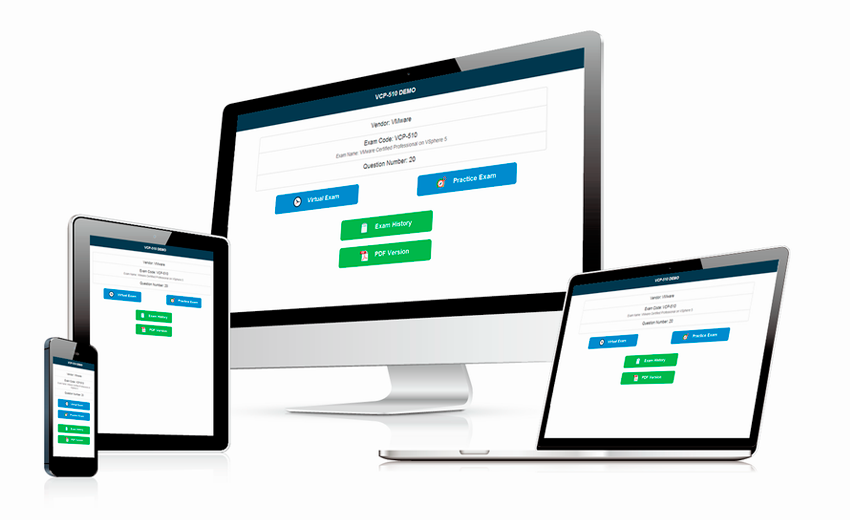
Free Demo


About The Open Group OG0-093 Exam Braindumps
Candidates use different devices, which is why the The Open Group TOGAF 9 Combined Part 1 and Part 2 set on ExamsTorrent comes in three versions: a printable PDF, a PC engine, and a browser-based online engine that runs on most electronics without installation.
The Open Group OG0-093 Exam Overview:
| Certification Vendor: | The Open Group |
|---|---|
| Exam Name: | TOGAF® 9 Combined Part 1 and Part 2 |
| Exam Number: | OG0-093 |
| Exam Price: | USD $360 |
| Real Exam Qty: | 48 |
| Passing Score: | Part 1: 55% (22/40 points), Part 2: 60% (24/40 points) |
| Available Languages: | Simplified Chinese (OG0-098), English |
| Certificate Validity Period: | None |
| Related Certifications: | TOGAF 9 Certified |
| Exam Duration: | 150 minutes |
| Exam Format: | Part 1: 40 Simple Multiple-Choice (Closed Book), Part 2: 8 Scenario Based, Complex Multiple Choice (Open Book) |
| Sample Questions: |  |
| Exam Way: | Authorized Examination Provider Test Centers and Remote delivery (Pearson VUE OnVUE). Part 1 is Closed Book; Part 2 is Open Book (electronic specification provided). |
| Pre Condition: | None |
| Official Syllabus URL: | https://certification.opengroup.org/credentials/togaf-9-certified |
The Open Group OG0-093 Exam Syllabus Topics:
| Section | Objectives |
|---|---|
| TOGAF 9 Part 2 (Assessed via Scenario-Based Questions) | - ADM Application
|
| TOGAF 9 Part 1 (Assessed via Simple Multiple Choice) | - Certification Program
|
OG0-093 Exam Questions and Answers
- TOGAF 9 Part 1 (Assessed via Simple Multiple Choice) ()
- TOGAF 9 Part 2 (Assessed via Scenario-Based Questions) ()
Allocate study time in proportion to each topic's weight.
The OG0-093 exam has 48 questions with a 150 minutes-minute time limit. Practicing under the same constraints on ExamsTorrent builds the pacing habits you will need on test day.
The PC engine installs on your computer and simulates the real exam scenario with timed tests and performance marking. The online engine runs in your browser, needs no installation, works on most devices, and is often the more stable option when you switch machines frequently.
A passing result on OG0-093 requires Part 1: 55% (22/40 points), Part 2: 60% (24/40 points), and the official exam fee is USD $360. Knowing both numbers upfront helps you budget your study time and money realistically.
The package includes 456 practice questions for the OG0-093 exam, covering the current The Open Group TOGAF 9 Combined Part 1 and Part 2 objectives with verified answers.
We support Credit Card payment because it is built around buyer protection: if a purchase issue ever arises, the card network's dispute process protects your money. Combined with our refund policy, that keeps your The Open Group TOGAF 9 Combined Part 1 and Part 2 purchase low-risk.
The Open Group TOGAF 9 Combined Part 1 and Part 2 Sample Questions:
Complete the sentence. The Architecture Development Method produces content to be stored in the Repository, which is classified according to the __________________.
- A. Enterprise Continuum
- B. ADM Guidelines and Techniques
- C. Standards Information Base
- D. Architecture Capability Framework
- E. Architecture Capability Model
Correct Answer: A 🗳️
Scenario
Please read this scenario prior to answering the Question
You are serving as the Lead Architect for the enterprise architecture team at a multinational company. The company has grown rapidly by acquisition and has inherited numerous supply chain processes and related IT systems. Several supply chain processes have had problems related to the timing of purchases, which has led to excess inventory. The Vice President in charge of Supply Chain Management has made the decision to consolidate and reduce redundant processes and systems. The company will move to a " Just-in-time " supply chain management system so as to keep inventory costs low.
The TOGAF standard is used for internal Enterprise Architecture activities. This project is using an iterative approach for executing the Architecture Development Method (ADM).
At present, there are no particularly useful architectural assets in the Architecture Repository related to this initiative. All assets will need to be acquired, customized, or created.The company prefers to implement commercial off the shelf package applications with little customization. The CIO, who is the project sponsor, has stated that she is not concerned about preserving the existing supply chain management processes or systems.
The architecture development project has completed Phase A and has started a number of iteration cycles to develop the Architecture. As a packaged application is being considered, the next iteration will include both the Business, Application and Data Architectures. Key stakeholder concerns that should be addressed by these architectures include:
1. What groups of people should be involved in supply chain management-related business processes?
2. What non-supply chain management applications will need to be integrated with the new supply chain management applications?
3. What data will need to be shared?
Refer to the Scenario
[Note: You may need to refer to Chapter 35 of the reference text in order to answer this question.] You have been asked to identify the most appropriate catalogs, matrices, and diagrams to support the next iteration of Architecture development.
Based on TOGAF, which of the following is the best answer?
- A. In the next iteration of Architecture development, you would describe the Target Business Architecture with an Organization/Actor catalog, a Business Service/Function catalog and Data Lifecycle diagrams.
You would describe the Target Application Architecture with an Application Interaction matrix and Application Communications diagrams. - B. You would describe the Baseline Business Architecture with a Business Service/Function catalog, an Organization/Actor catalog and a Data Entity/Business Function matrix. You would describe the Baseline Data Architecture using a Data Entity/Data Component catalog. You would describe the Baseline Application Architecture with an Application/Function matrix.
- C. You would describe the Target Business Architecture with a Business Service/Function catalog, and a Business Interaction matrix. You would describe the Target Data Architecture with a Data Entity
/Business Function matrix and an Application/Data matrix. You would describe the Target Application Architecture with Application Communication diagrams and an Application Interaction matrix. - D. In the next iteration of Architecture development, you would describe the Baseline Business Architecture with a Value Chain diagram and a Baseline Business Process catalog. You would describe the Baseline Data Architecture with a Data diagram. You would describe the Baseline Application Architecture with an Environment and Location diagram.
Correct Answer: A 🗳️
Scenario:
Please read this scenario prior to answering the question
Your role is that of the Lead Enterprise Architect at a multinational automotive corporation. The company is headquartered in Germany, and manufactures cars, trucks and buses. It has manufacturing plants across North America, South America, Europe and Asia. Each of these plants has been operating its own planning and production scheduling systems, as well as custom developed applications that drive the automated production equipment at each plant.
The company has an ongoing initiative to improve the efficiency of all of its production operations, and in particular to reduce its carbon footprint. During a recent exercise held for internal quality improvement, it was determined that a significant reduction in energy usage could be achieved by replacing the current planning and scheduling systems with a common Enterprise Resource Planning (ERP) system located in one central data center. This central system would provide support to each of the plants replacing the functionality in the existing systems. It would also eliminate the need for full data centers at each of the plant facilities.
The Enterprise Architecture department has been operating for several years and has mature, well-developed architecture governance and development processes that are strongly based on TOGAF standard.
At a recent meeting, the Architecture Board approved a Request for Architecture Work sponsored by the global CIO. The request covered the initial architectural investigations and the development of a comprehensive architecture to plan the transformation.
The architecture project team has now been formed, and has been asked to develop an Architecture Vision that will achieve the desired outcomes and benefits. Some of the plant managers have expressed concern about the security and reliability of driving their planning and production scheduling from a remote centralized system. The CIO wants to know how these concerns can be addressed. During the initial project team meeting a number of alternative recommendation for how to proceed have been put forward by members of the team.
Refer to the Scenario
You have been asked to select the most appropriate recommendation to ensure that the team evaluates different approaches to the problem and clarifies the requirements for the architecture.
Based on the TOGAF standard, which of the following is the best answer?
- A. The team should identify the individuals and groups within the organization who will contribute to the project in order to understand who has concerns about the initiative. The team should then hold a series of interviews at each of the manufacturing plants using the business scenario technique. This will then enable them to identify and document the key high-level stakeholder requirements for the architecture.
- B. The team should exercise due diligence and carefully research vendor literature and conduct a series of briefings with vendors that are on the current approved supplier list. Based on the findings from the research, the tam should define a preliminary Architecture Vision. The team should then use that model to build consensus among the key stakeholders.
- C. The team should perform a shallow architecture development iteration, developing Baseline and Target Architecture for each of the manufacturing plants. This should include development of a set of views corresponding to selected viewpoints that address key concerns of the stakeholders. A consolidated gap analysis between the architectures will then be used to validate the approach and determine the capability increments needed to achieve the target state.
- D. The team should utilize its approved supplier list, and conduct a pilot project that will enable those suppliers to demonstrate potential solutions that will address the concerns of the stakeholders. Based on the findings of that pilot project, a complete set of requirements will be developed that will drive the evolution of the architecture.
Correct Answer: A 🗳️
Scenario:
Please read this scenario prior to answering the question
ABC LLC is a vacation property management firm that is growing through acquisition. It manages over 200 resort properties across North America. Many of the resort properties use the same internal IT systems that they used before they were acquired. Until recently, the only requirement that has been placed in each property is that they use a standard financial reporting system to report their financials ID the headquarters on a weekly basis.
The CEO has stated his concerns about the inefficiencies of the current approach and identified the need to change. He has defined a new strategic vision that will enhance the LLC property business by standardizing its operations across the network to provide consolidated financial, human resources, logistics, sales and marketing, and yield management. He has also stated that he expects results by the end of the current fiscal year.
These changes will provide the company with improved utilization of its capacity and more efficient operations. The addition of a corporate-wide data warehouse will provide analytics that will enable the marketing group to improve its ability to target advertising into key markets to improve yields.
The LLC has a mature enterprise architecture (EA) practice and uses TOGAF 9 as the method and guiding framework. The CIO is the sponsor of the activity.
In planning this change, the Chief Architect engaged the services of a well-known consulting firm that specializes in business strategy. An initial study has been conducted to identify the strategic changes needed to implement the CEO ' s vision. This recently completed with approval of a strategic architecture encompassing the entire firm, including detailed requirements and recommendations.
Based on the recommendations from the initial engagement, the company has embraced an Architecture Vision to adopt an enterprise application that is tailored to the needs of the hospitality industry.
Refer to the scenario
Your role is that of Chief Architect. You have been asked to recommend the best approach to take in this architecture engagement to realize the CEO ' s vision.
Based on TOGAF 9, which of the following is the best answer?
- A. Since the vision is well understood and the strategic architecture agreed, you recommend that the target architecture is defined first, followed by transition planning. This will ensure that the current inefficiencies of the baseline architecture are not carried forward, and that the proposed solution addresses the requirements identified in the initial architecture engagement.
- B. Since the initial engagement has identified the need to change, you recommend that the team focus on defining the target architecture by going through the architecture definition phases (B-D). This will ensure that the change can be defined in a structured manner and address the requirements needed to realize the vision.
- C. You recommend that the team focus on architecture definition, with a specific emphasis on understanding the strategic change parameters of the business strategy. Once understood, the team will be in the best position to identify the requirements, drivers, issues, and constraints for this engagement.You would ensure that the target architecture addresses non-functional requirements so as to help forecast future impacts.
- D. You recommend that this engagement define the Technology Architecture first in order to assess the current infrastructure capacity and capability. Then the focus should be on transition planning and architecture deployment. This will identify requirements to ensure that the projects are sequenced in an optimal fashion so as to realize the vision.
Correct Answer: D 🗳️
Which one of the following statements about TOGAF Building Blocks is NOT true?
- A. They should have stable, published interfaces that allow other building block to interoperate with them
- B. They are packages of functionality intended to meet the business needs across the organization
- C. They have defined boundaries
- D. They should not be reused in other enterprise architecture projects
Correct Answer: D 🗳️
Viewing page 1 out of 92 pages.
Viewing questions 1-5 out of 456 questions.